
Imagine trying to focus on an exam while dealing with severe menstrual cramps. To make matters worse, you have to leave school grounds and knock on a stranger’s door just to use a bathroom.
For years, this was the reality for female students at Air Hidup Christian High School in Sumba, East Nusa Tenggara.
Today, students study in safe classrooms, have access to clean water, and can focus on learning without worrying about their most basic needs. But behind that transformation is the story of someone who experienced both worlds.

Her name is Destriyati.
In January 2026, she returned to Air Hidup Christian High School—not as a student, but as a teacher.
While many young people leave their hometowns in search of better opportunities, Destriyati chose a different path. For her, earning a university degree was never about escaping her past. Instead, it was about fulfilling a promise she quietly made years earlier while sitting beneath a leaking thatched roof.
“What stays in my memory the most is the sound of rain hitting that roof,” Destriyati recalls, looking back to 2018. “It was so loud that it often drowned out the teacher’s voice.”
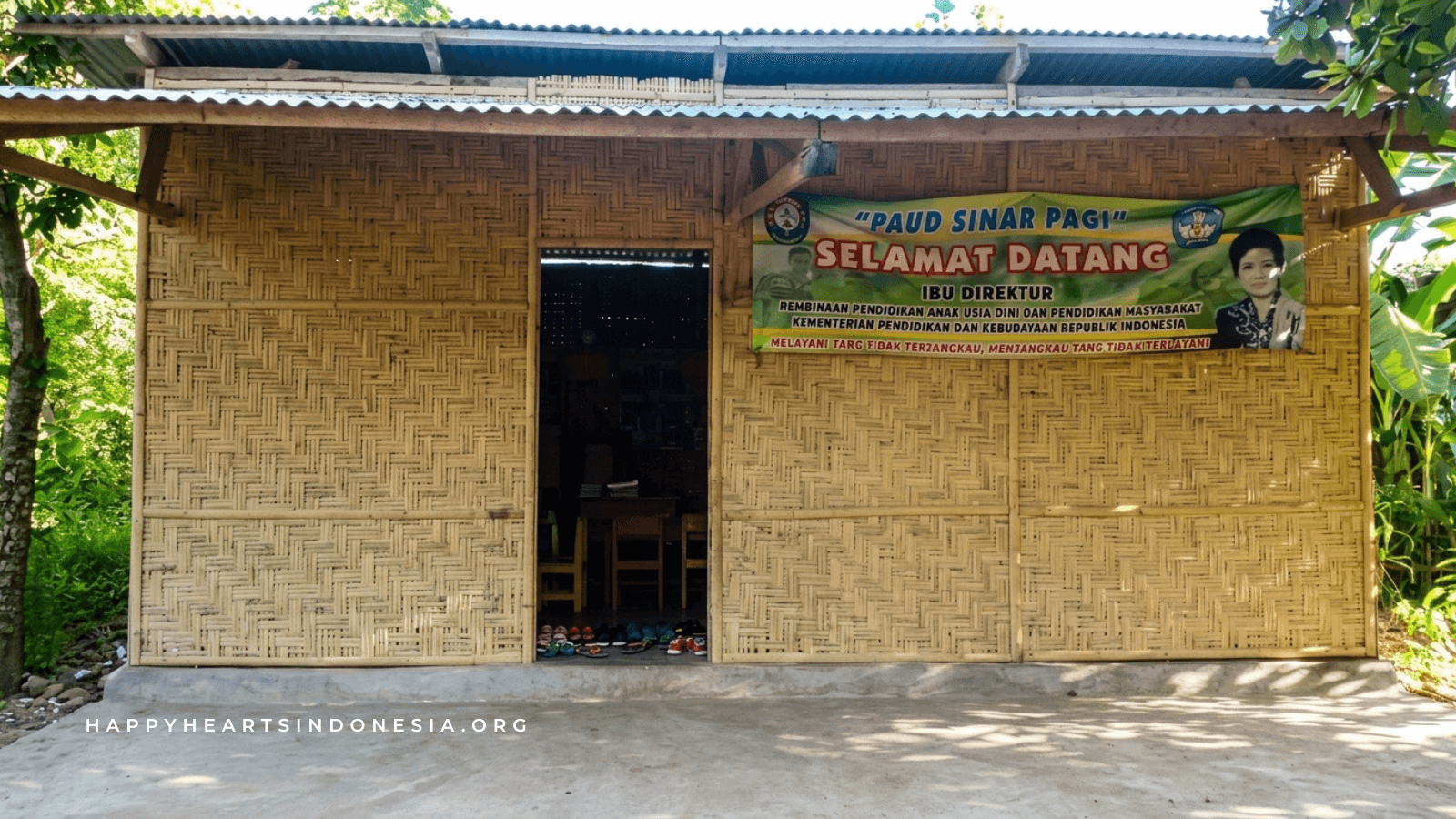
Back then, she was one of just 14 students in the school’s very first class. During the rainy season, lessons were often interrupted as students and teachers worked together to scoop out rainwater and protect their desks. The classroom smelled of wet earth and damp bamboo, and learning was anything but easy.

Yet the classroom conditions were only part of the challenge.
Every morning, Destriyati left home at 6:00 a.m. and walked nearly two kilometers along broken, dusty roads to reach school before the bell rang. Some of her classmates faced even greater obstacles.
Students from Central Sumba, nearly 46 kilometers away, had to stay with relatives closer to school. They woke up before dawn to help with household chores before going to school and often struggled with homesickness.
“They had to cook, wash dishes, and help around the house just to show they weren’t a burden,” Destriyati remembers. “Some cried quietly at night because they missed their parents.”
For many families, education felt out of reach. Financial difficulties and family responsibilities forced some students to leave school before graduation.
Still, Destriyati and her classmates refused to give up.
In fact, the criticism they received from people outside the school only strengthened their determination.
“Many people called the school bad or said it was too strict,” she says. “We wanted to prove them wrong. We wanted to show our parents that despite all the limitations, we could graduate and build a better future.”

But while long journeys and difficult learning conditions tested their determination, another challenge affected nearly every aspect of school life.
The school had no reliable access to clean water.
Without a proper water source, the school had to purchase water deliveries, with each truckload costing around IDR 300,000. When the water ran out, students carried containers from a nearby church, and everyday activities became difficult.
For female students, the impact went far beyond inconvenience.
“When the water ran out, especially during our periods, we had no choice,” Destriyati recalls. “We had to ask permission to leave class, walk to a neighbor’s house, and ask if we could use their bathroom.”
Although the neighbor was always kind, the experience was uncomfortable and embarrassing.
“It wasn’t just about using a toilet,” she says. “It was about staying clean and protecting our dignity.”
Some girls went home early because they felt uncomfortable. Others missed important lessons altogether.
Looking back now, Destriyati believes those experiences revealed something important.
“Clean water is not a luxury,” she says. “It is a basic right. Children need it to learn comfortably, confidently, and with dignity.”
Life outside school was not easy either.
Most families in the community earn a living by growing corn or raising livestock such as chickens and pigs. With unpredictable harvests and fluctuating prices, even modest school fees could be difficult to afford.
Over time, however, new opportunities began to emerge.
Through the support of generous donors and foundations, the school was eventually able to provide full scholarships for high-achieving students, bringing new hope to families in the community. Today, the school continues to rely on donor support and the facilities built by Happy Hearts Indonesia.
Throughout her years as a student, one thing left a lasting impression on Destriyati.
Despite the leaking roofs, water shortages, and limited resources, her teachers never stopped showing up for their students.
“When I saw my teachers teach with so much passion despite all the limitations, that’s where my dream started,” she says.
“I told myself that if I ever succeeded, I had to come back and serve the school that raised me.”
Determined to honor that promise, Destriyati worked hard through college and graduated on December 13, 2025.
Although opportunities existed elsewhere, her heart pulled her back home.
Just weeks after graduating, she returned to Air Hidup Christian High School as a teacher.

By then, the school she remembered had begun to change.
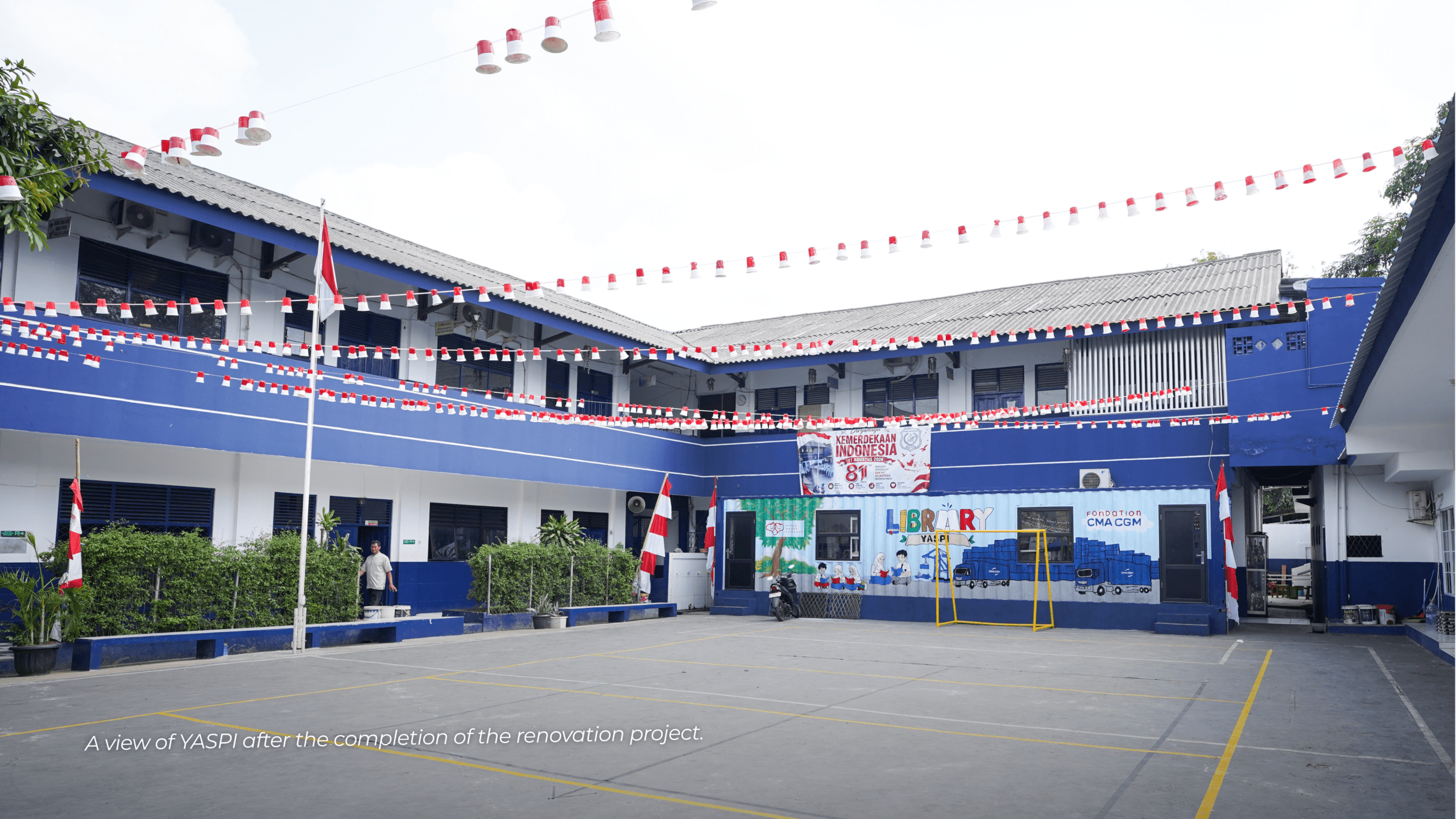
Through the support of Happy Hearts Indonesia and generous donors, new classrooms had been built, creating a safer and more comfortable environment for learning. Most importantly, a new water well finally provided reliable access to clean water.
For students and teachers alike, the impact was immediate.

“The difference is night and day,” Destriyati says with a smile.
Students no longer worry about whether water will run out. Rain no longer interrupts lessons. Classrooms are equipped with fans, and children can focus on learning in a safe environment.
Attendance has risen to nearly 100 percent. The stories of students missing school because of water shortages have become a thing of the past.
The money once spent on water deliveries can now be used for repairing desks, purchasing school supplies, and improving teaching materials.
“We used to spend our resources just trying to survive,” Destriyati says. “Now we can invest in helping our students grow.”

The new HHI library has also become a favorite place for students. During recess, children fill the room to read books, complete assignments, and explore new ideas.
Teachers have noticed improvements in academic performance as well.
“With better facilities, the children are much more excited about learning,” Destriyati explains. “Their grades have improved significantly. We are proud of how much they have grown.”
Perhaps the most remarkable transformation is not visible in the buildings or infrastructure.
It can be found in the dreams of the children themselves.
“In the past, many children only imagined becoming farmers like their parents,” she says. “Today, when I ask students what they want to become, their answers are very different.”
Some dream of becoming teachers.
Others want to become nurses, engineers, police officers, and professionals in fields they previously knew very little about.

Looking around her classroom today, Destriyati sees something she rarely experienced as a student: children who are free to focus on learning rather than worrying about water.
She sees students reading in the library during recess, arriving at school eager to learn, and dreaming of futures that once felt out of reach.
“The difference is night and day,” she says.
For Destriyati, the transformation is about much more than new buildings or clean water. It is about giving every child the opportunity to learn with dignity and dream beyond the limitations of their circumstances.
And for the children of Sumba, the future no longer feels out of reach.